
HI, visited BCWM hoping to find Harrier in hide, but it has been moved to HAS for a tidy up. Sad to see it in such a state. Camera controls have been removed and replaced with an unknown panel, comms maybe. Never worked on this one after my time at Gutersloh. Hope to visit in 2 years when it returns to the main site.
Chris Bovington
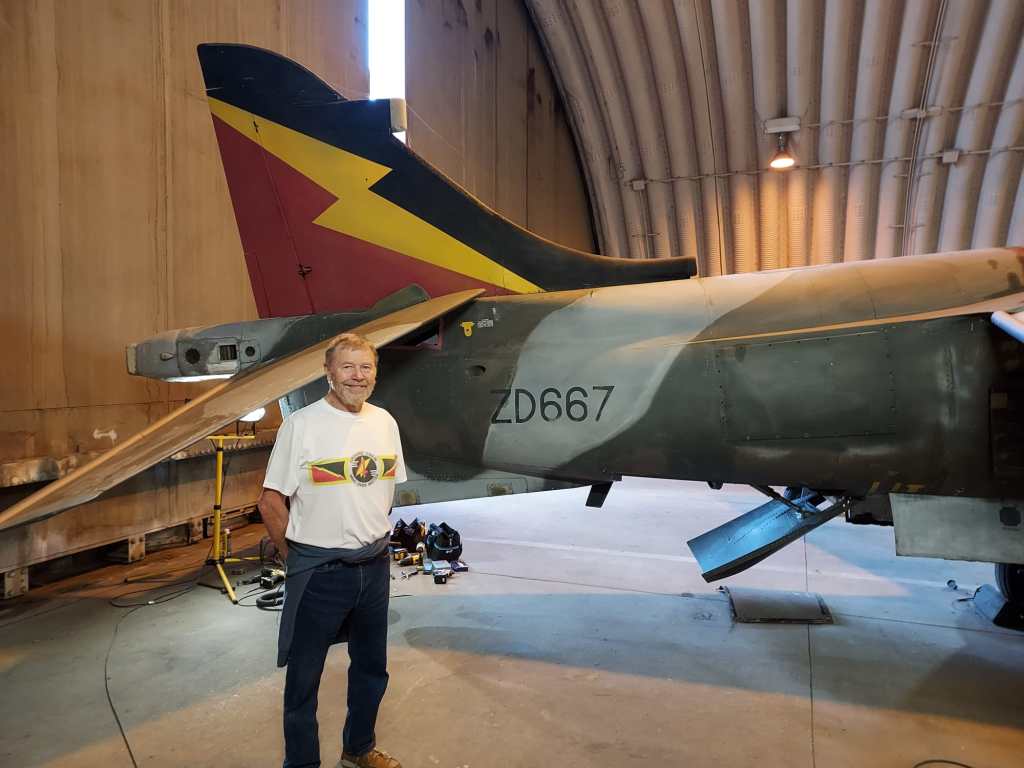

Background information: The following information is taken from the BCWM website:
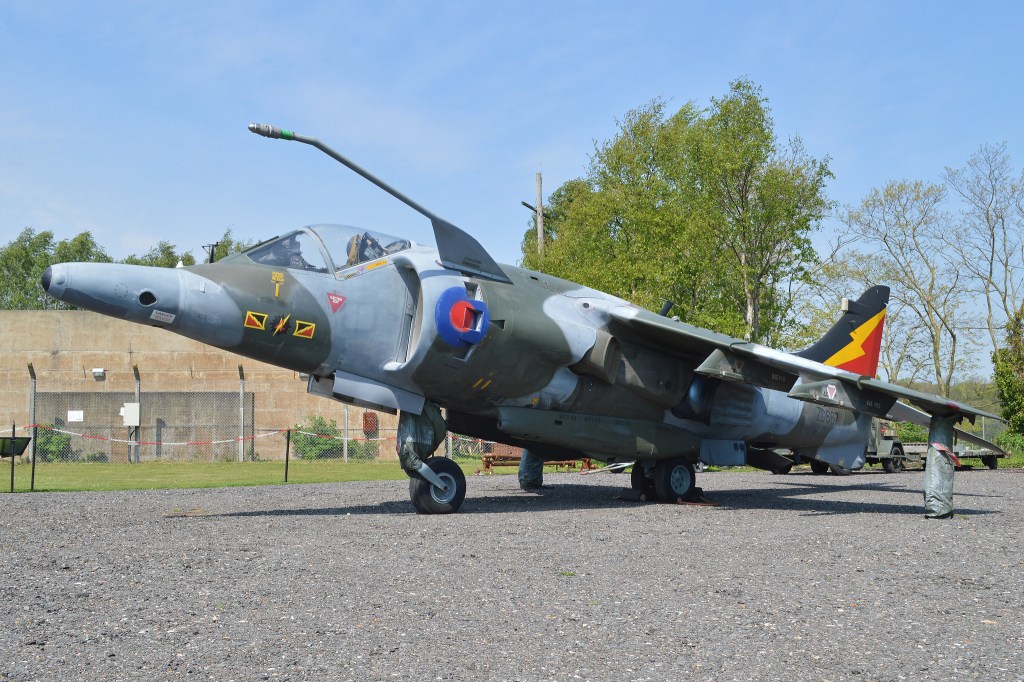
ZD667 was the first of a batch of four Harrier GR.3s built for the RAF as a stop-gap whilst the second generation Harrier (GR.5 later converted to GR.7 and GR.9 variants), was entering service in the late-80s. As a consequence of this, ZD667 was actually a newer aircraft than several of the Harrier GR.9s that were in service with the RAF up until December 2010. ZD667 only spent eight years in frontline service with the RAF before being retired. Following retirement, ZD667 was transferred to the Royal Navy at RNAS Culdrose, where it was used for training Fleet Air Arm groundcrew in the art of handling aircraft on carrier decks. With the loss of the Fleet Air Arm’s fixed-wing component (due to the retirement of the Sea Harrier), there was no longer a requirement for fixed-wing deck handling training. During May 2007, ZD667 was moved to Culdrose’s satellite airfield at RNAS Predannack, where it was used for fire and crash rescue training. ZD667 was purchased by Everett Aero in December 2012 and subsequently bought by the Museum in February 2013 following a generous donation by Bentwaters Aviation Society member Brian Smee. ZD667 has been re-painted in the very colourful markings it wore whilst assigned to IV(AC) Sqn at RAF Gütersloh in West Germany during the late 1980s.
 RAF Photographers Memorial